
Bonding chemistry · METHACRYLATE
Methacrylate adhesives
Methacrylate, or structural acrylic, is a two-part reactive adhesive that builds high-strength, tough bonds and tolerates surfaces that are not perfectly prepared. It is the chemistry fabricators reach for when a joint has to carry real load, and it spreads stress across the whole bond instead of concentrating it at welds or fasteners.
Products
MightyLoc Methacrylate products
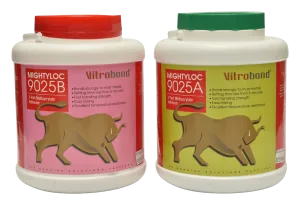
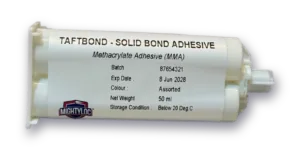
Specifications
| Product | Viscosity | Service temperature | Fixture time |
|---|---|---|---|
| MightyLoc 9025 | 3000-5000 cps at 25°C | -40 to 150 °C | 15 minutes (set to touch) |
| Taftbond Solid Surface Adhesive | 40,000-100,000 cps (adhesive) / 18,000-25,000 cps (activator), Brookfield RVT at 25°C | -34 to 121 °C | 20 to 30 minutes |
Values as published on each product page. Full Technical Data Sheets are linked there.
FAQ · METHACRYLATE
Questions about Methacrylate.
Methacrylate is a two-part reactive chemistry that builds high-strength, tough bonds able to carry real load, spreading stress across the whole joint instead of concentrating it at welds or fasteners. It keeps useful peel and impact strength as a class. Confirm the rated strength for your joint on the product Technical Data Sheet.
Methacrylate tolerates minimally prepared or lightly oily surfaces better than many structural adhesives, which saves time, but it is not a substitute for preparation. Clean, degrease, and abrade the faces for the strongest, most repeatable bond. The product Technical Data Sheet lists the recommended steps.
MightyLoc 9025 is a methacrylate structural adhesive focused on metal bonding. Methacrylate chemistry as a class also bonds composites and many plastics, so follow the 9025 data sheet for the substrates it specifically covers rather than assuming a broader range.
Methacrylate generally offers more toughness and better tolerance of imperfect surfaces, while epoxy offers maximum rigidity, chemical resistance, and gap fill. The related guide below sets the two side by side. Confirm the right choice for your load and substrate on the product Technical Data Sheet.
How does methacrylate cure?
Methacrylate adhesives are supplied in two parts that are metered and mixed, then cure by a reactive process into a strong, tough bond. Unlike rigid thermosets, they keep useful toughness, which means better peel and impact resistance as a class. A practical advantage on a real production floor is their tolerance of minimally prepared or lightly oily surfaces, though a defined surface preparation still gives the most repeatable result. Confirm mixing, working time, and cure on the product Technical Data Sheet.
Where is methacrylate used?
Methacrylate suits load-bearing assemblies, joints between dissimilar materials, and work that reduces welding or mechanical fasteners. Bonding spreads stress across the whole joint rather than concentrating it at a weld point or a bolt hole, and it avoids heat distortion. MightyLoc 9025 is a methacrylate structural adhesive focused on metal bonding; methacrylate chemistry as a class also bonds composites and many plastics, so follow the specific product data sheet for the substrates it covers.
How do you get a good methacrylate bond?
Clean off loose dirt, degrease, and abrade the bonding faces, then dry-fit before any adhesive goes on. Meter and mix the two parts as the data sheet directs and fixture the parts undisturbed through the cure. The MightyLoc 9025 Technical Data Sheet carries the exact ratios, working time, and service window for your conditions.