
Industries · MARINE & SHIPBUILDING
Bonding solutions for marine & shipbuilding.

Marine and shipbuilding work places adhesives and sealants under sustained stress: salt spray, humidity, UV exposure, vibration, and the structural movement of hulls and superstructures. MightyLoc offers structural adhesives, elastomeric sealants, and anaerobic threadlockers selected for these conditions, covering metal bonding, deck and window sealing, and fastener retention without welding or mechanical fixings.
Recommended products
MightyLoc products for Marine & Shipbuilding
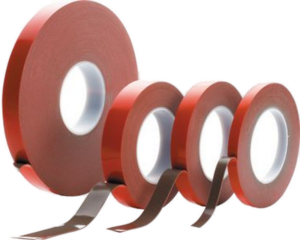
AFT 1080GF
Acrylic Foam Tape
AFT 1120GF
Acrylic Foam Tape
AFT 1200GF
Acrylic Foam Tape
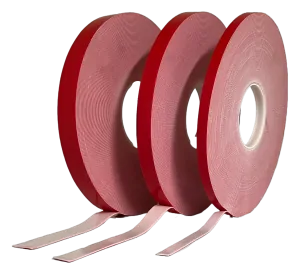
AFT 2064WF
Acrylic Foam Tape
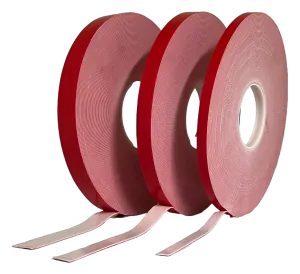
AFT 2120WF
Acrylic Foam Tape
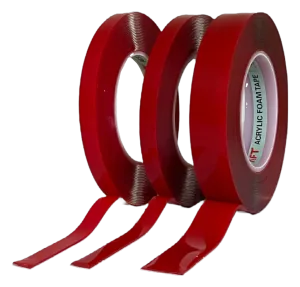
AFT 3100CF
Acrylic Foam Tape
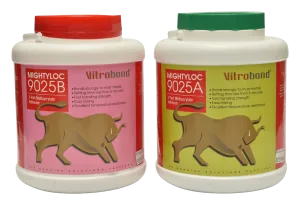
MightyLoc 9025
Methacrylate
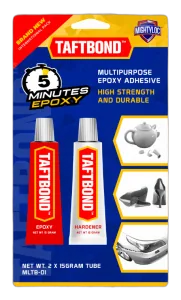
Taftbond 5 Minutes Epoxy
5 Minutes Epoxy
Taftflex 6221
Polyurethane Sealant
Taftflex 6292
Polyurethane Sealant

TaftGrip
MS Polymer
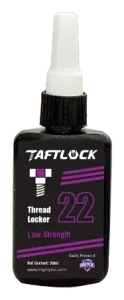
Taftlock 22
Anaerobic Adhesives
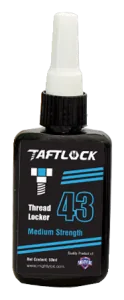
Taftlock 43
Anaerobic Adhesives
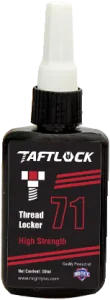
Taftlock 71
Anaerobic Adhesives
Not sure which to choose?
Tell us your substrates and service conditions; we will point you to the right chemistry.
Talk to our teamFAQ · MARINE & SHIPBUILDING
Questions marine & shipbuilding teams ask.
Yes. MightyLoc 9025 is a two-part methacrylate adhesive designed to join dissimilar metals without heat distortion and delivers lap shear strength of 86 kg/cm2. Confirm surface preparation requirements and mix ratio from the current Technical Data Sheet before use.
Taftflex 6292 is formulated for moving joints, with around 600 percent elongation at break. It bonds metal, glass, fibreglass and wood, is paintable and non-staining, and covers a service range of -40 to +90 C. Verify the figure against the current TDS before specifying.
TaftGrip is non-corrosive, odourless, and free of solvents, isocyanates, silicones and PVC, which reduces risk near sensitive substrates and coatings. It cures by atmospheric moisture. Confirm compatibility with the specific substrate and coating system before production application.
Taftlock 43 is specified for fasteners from 6 to 20 mm including stainless steel and plated parts. It locks and seals against vibration and is removable with hand tools. Service temperature range is -55 to +150 C. Confirm fastener diameter and disassembly requirements against the current TDS.
AFT 1080GF bonds metal, aluminium, stainless steel, acrylic and glass as a structural double-sided tape, rated at 3000 g/25mm 180-degree peel strength. It is intended as a replacement for screws and rivets in appropriate assemblies. Verify load requirements and temperature range against the current TDS before replacing mechanical fixings.
Both Taftflex 6221 and Taftflex 6292 are described as paintable. Ensure the sealant has reached the cure state required for overpainting before applying topcoat. Confirm paint compatibility and required cure time with the current Technical Data Sheet.
What are the environmental and structural challenges in marine bonding?
Salt water, condensation, UV radiation, and continuous vibration degrade bonds that work reliably in sheltered environments. Hull and superstructure panels flex as a vessel moves through water, so a rigid adhesive joint that performs on a static structure may crack in service. Dissimilar metal combinations, such as aluminium to stainless steel, introduce galvanic and thermal-expansion differences that stress the bond line. Deck fittings, windows, and hatches need watertight seals that remain elastic as the surrounding structure moves. Threaded fasteners in wet, vibrating machinery loosen over time and corrode, sometimes seizing so tightly that routine maintenance becomes difficult. Addressing these challenges requires matching chemistry to application: structural rigidity where loads are high, controlled elasticity where movement is expected, and chemical resistance throughout.
How do you select chemistry and product by application?
For structural metal bonding where welding would distort thin plate or is impractical on dissimilar metals, MightyLoc 9025, a two-part methacrylate adhesive, delivers a lap shear strength of 86 kg/cm2 across a service range of -40 to +150 C continuous. AFT 1080GF, a grey acrylic foam tape, provides structural double-sided bonding on metal, aluminium, stainless steel, acrylic and glass, replacing screws and rivets with a 180-degree peel strength of 3000 g/25mm and a service range of -10 to +90 C. For elastic sealing of deck fittings, windows and panels, Taftflex 6292 offers around 600 percent elongation at break, bonds metal, glass, fibreglass and wood, and is paintable and non-staining across -40 to +90 C. TaftGrip, a one-component MS polymer adhesive sealant, is non-corrosive, solvent-free, isocyanate-free and silicone-free, making it suitable near sensitive substrates; it cures by moisture, skins in 5 to 10 minutes and reaches full cure in 7 days. Taftflex 6221 is a paintable, permanently elastic one-component polyurethane sealant for general jointing across -40 to +80 C. For threaded fasteners, Taftlock 22 handles smaller fasteners up to 6 mm with low-strength retention that allows hand-tool removal; Taftlock 43 covers 6 to 20 mm fasteners including stainless steel and plated parts at medium strength; Taftlock 71 provides high-strength locking for metal screws and fasteners. All three anaerobic threadlockers resist vibration loosening and cover a service range of -55 to +150 C.
How do you specify and apply these products on marine projects?
Substrate preparation determines bond quality more than any other variable. Metal surfaces should be clean, dry, and free of mill scale, grease, and loose oxide before structural adhesive or tape is applied. For MightyLoc 9025, mix ratio and open time should be confirmed from the current Technical Data Sheet before production use. AFT 1080GF requires firm initial pressure across the bond line to achieve the rated peel strength; temperature during application should stay within the product handling range. When using TaftGrip or the Taftflex range in enclosed spaces, ventilation requirements on the TDS should be checked even though TaftGrip is solvent-free; confined areas can accumulate vapour from adjacent materials. Anaerobic threadlockers such as Taftlock 22, 43 and 71 cure only in the absence of air between close-fitting metal parts; they do not cure on passive or non-metallic threads, and cure rate varies with temperature. For any application where a numeric performance value is load-bearing to the design, the figure should be verified against the current TDS, as formulations can be updated.