
Bonding chemistry · ACRYLIC FOAM TAPE
Acrylic foam bonding tapes
Acrylic foam tape is a double-sided, pressure-sensitive tape with a viscoelastic acrylic foam core. It bonds on contact under firm pressure and builds strength over a dwell period, with no mixing or cure step. It distributes stress, absorbs vibration and thermal movement, and seals the joint, which is why it replaces rivets, welds, and screws for panels and trim.
Choose a MightyLoc AFT tape by colour and thickness: grey AFT 1080GF, 1120GF and 1200GF (0.8, 1.2 and 2.0 mm) for hidden metal joints, white AFT 2064WF and 2120WF (0.64 and 1.2 mm) for light panels, and clear AFT 3100CF (1.0 mm) for glass and clear acrylic.
Products
MightyLoc Acrylic Foam Tape products
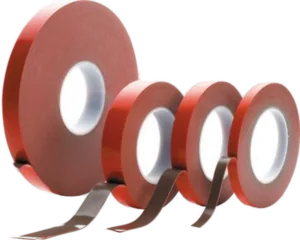
AFT 1080GF
Acrylic Foam Tape
AFT 1120GF
Acrylic Foam Tape
AFT 1200GF
Acrylic Foam Tape
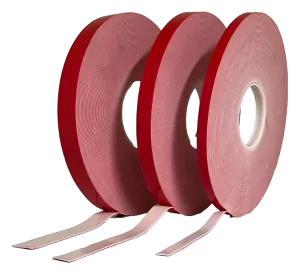
AFT 2064WF
Acrylic Foam Tape
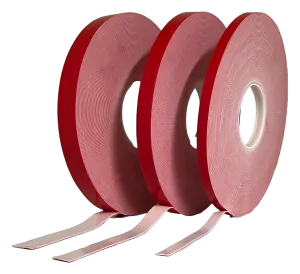
AFT 2120WF
Acrylic Foam Tape
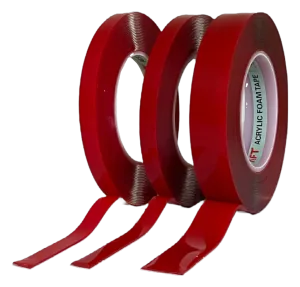
AFT 3100CF
Acrylic Foam Tape
Browse the full catalog
Find a product by chemistry, brand, and substrate.
View all productsSpecifications
| Product | Service temperature | Foam thickness |
|---|---|---|
| AFT 1080GF | -10 to 90 °C | 0.8 mm |
| AFT 1120GF | ≥100 °C (long term) | 1.2 mm |
| AFT 1200GF | ≥80 °C (long term) | 2.0 mm |
| AFT 2064WF | ≥100 °C | 0.64 mm |
| AFT 2120WF | -10 to 90 °C | 1.2 mm |
| AFT 3100CF | -10 to 90 °C | 1.0 mm |
Values as published on each product page. Full Technical Data Sheets are linked there.
FAQ · ACRYLIC FOAM TAPE
Questions about Acrylic Foam Tape.
Yes. Acrylic foam tape is a double-sided tape, but a high-bond, permanent-grade one with a viscoelastic acrylic foam core. That sets it apart from thin-film standard double-sided tapes, which are light-duty and often temporary with a thin adhesive layer and lower strength.
It bonds on contact under firm pressure, then builds to full strength over a dwell period as the acrylic wets out the surface. There is no mixing or cure step. The exact dwell and application pressure depend on the grade and substrate, so confirm them on the product Technical Data Sheet.
The foam core spreads load across the whole bonded area, absorbs vibration and thermal movement, and seals the joint, with no holes and no visible fasteners. That suits panels, trim, and signage. Confirm the tape is rated for your panels and environment on the product Technical Data Sheet.
No. Grades differ in thickness, colour, and rated performance, so always select on the specific grade. Published 180-degree peel figures vary by grade, for example about 3000 g per 25 mm for AFT 1080GF and about 2000 g per 25 mm for AFT 3100CF. Confirm the value for your grade on its Technical Data Sheet.
How does acrylic foam tape work?
Acrylic foam tape bonds the moment it is pressed onto a clean surface under firm pressure, then builds to its full strength over a dwell period as the acrylic wets out the substrate. There is no mixing and no cure step. The foam core is viscoelastic, so it spreads load across the whole bonded area and absorbs vibration and the expansion and contraction of panels with temperature. It also seals the joint as it bonds. Confirm surface preparation, application pressure, and dwell time on the product Technical Data Sheet.
Where is acrylic foam tape used?
Acrylic foam tape suits bonding panels, trim, and signage where a clean, sealed, vibration-tolerant joint matters and visible fasteners are unwanted. Outdoor heat, ultraviolet exposure, and vibration in transport favour a durable acrylic chemistry. It is a high-bond, permanent-grade tape, distinct from thin-film standard double-sided tapes that are light-duty and often temporary. The MightyLoc range covers grey, white, and clear grades for different jobs.
How do you choose an acrylic foam tape grade?
Grades differ in thickness, colour, and rated performance, so select on the specific grade rather than the family. Published 180-degree peel figures include about 3000 g per 25 mm for AFT 1080GF, about 3200 g per 25 mm for AFT 2120WF, and about 2000 g per 25 mm for AFT 3100CF; other grades carry their own values. Logs are about 33 m long and up to 800 mm wide. Confirm the figure, thickness, and temperature range for the grade you need on its Technical Data Sheet.
Surface preparation and roller pressure for AFT tapes
- Clean and dry both surfaces: isopropyl alcohol (IPA) for general cleaning, heptane where the surface is oily, and never an oil-based solvent.
- Abrade the surfaces, taking care on glass and clear acrylic to avoid visible scratches, then wipe off the dust with IPA and let it dry. Ask MightyLoc about a primer for hard-to-bond substrates.
- Apply the tape at an ambient temperature of 15 to 35 °C, so the adhesive wets out properly.
- Lay the tape from one end so no air is trapped, and align the parts before they touch, because the bond resists repositioning.
- Roll the full tape length firmly with a J-roller, then leave the joint undisturbed while strength builds.
Bond strength builds with dwell time: the AFT 1200GF datasheet gives a dynamic shear strength of at least 3000 gf/cm² (about 0.29 MPa) within 20 minutes and at least 4000 gf/cm² (about 0.39 MPa) after 24 hours.
MightyLoc’s brochure excludes polypropylene, polyethylene, PTFE and nylon for the whole AFT range, and silicone surfaces are not recommended either. For the full preparation routine, see Surface preparation: the step that decides every bond.