
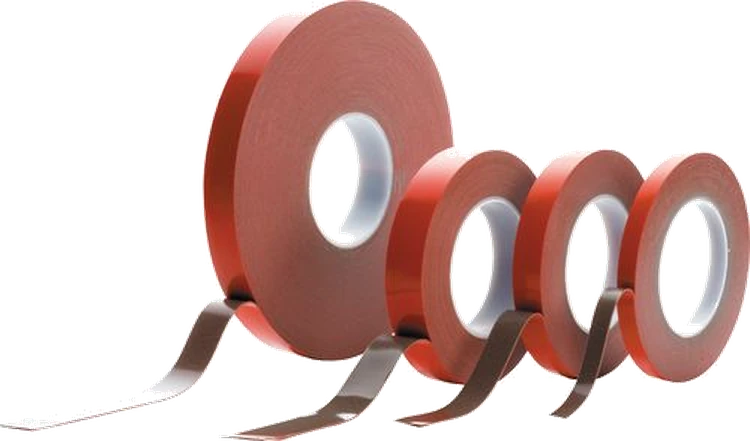
Both are double-sided tapes, but they are not the same class. Standard thin-film double-sided tape is light-duty, with a thin adhesive layer, low strength and poor stress distribution. Acrylic foam tape has a viscoelastic foam core that bonds on contact, builds strength over a dwell period, distributes stress, absorbs vibration and seals the joint. For panels, trim and signage that must last outdoors, choose acrylic foam tape.
Foam thickness and peel from the MightyLoc AFT TDS. Standard thin-film tape has no published thickness or peel value, shown qualitatively.
Are they really the same kind of tape?
Both products are double-sided pressure-sensitive tapes, so it is fair to call them cousins. The difference is in the core. Standard double-sided tape is a thin film of adhesive on a thin carrier. Acrylic foam tape carries the adhesive on a thicker viscoelastic acrylic foam core. That single design choice changes how the bond forms, how it shares load, and how long it survives outdoors.
Treat them as two classes for two jobs. Thin-film tape is right for light, often temporary holding: mounting paper, splicing, fixing trim during assembly, or holding parts while a primary fastener takes over. Acrylic foam tape is engineered as a permanent, high-bond joint for panels and signage, where it can replace rivets, welds and screws.
How does each tape build its bond?
A thin-film double-sided tape grabs quickly because there is very little material between the two surfaces. That same thinness limits how much load it can carry and how well it tolerates an uneven or slightly rough surface.
Acrylic foam tape works differently. The foam core bonds on contact under firm pressure, then builds strength over a dwell period at room temperature. There is no mixing and no separate cure step. The viscoelastic core flows into surface texture for intimate contact, and once dwell is complete the joint reaches its working strength. Confirm the dwell time and the surface preparation for each grade on its TDS, since these drive the final result.
Why does the foam core matter for panels?
Panels move. They expand and contract with heat, they flex in transport, and they vibrate. A rigid, thin bond line concentrates that movement at the edges and can peel or fatigue over time.
The acrylic foam core spreads load across the whole bonded area rather than at a few points, and it stretches and recovers to absorb vibration and thermal movement between two materials that expand at different rates. It also closes the gap between the parts, so the joint is sealed against water and dust along the bond line. The result is a clean exterior with no visible fasteners and no holes to corrode or leak.
How strong is acrylic foam tape, and how is that measured?
For pressure-sensitive tapes, peel adhesion is commonly reported per ASTM D3330 and holding power per ASTM D3654. MightyLoc publishes 180-degree peel figures on each grade’s TDS. As verified examples, AFT 1080GF is about 3000 g per 25 mm, AFT 2120WF is about 3200 g per 25 mm, and AFT 3100CF is about 2000 g per 25 mm.
Read those numbers as grade-specific, not as a single figure for the whole range. Each grade is tuned for a different surface and use, so the right value is the one on the grade you actually plan to use. Logs run about 33 m long and up to 800 mm wide. Always confirm peel, width and length against the current Technical Data Sheet in the TDS library.
| Property | Standard thin-film double-sided tape | Acrylic foam tape (AFT range) |
|---|---|---|
| Core construction | Thin adhesive film on a thin carrier | Thick viscoelastic acrylic foam core, adhesive both sides |
| How the bond builds | Quick grab on contact, limited by the thin layer | Bonds on contact under pressure, builds strength over a dwell period |
| Peel adhesion (per ASTM D3330) | Low, light-duty | High; verified 180-degree peel about 3000 g/25 mm (1080GF), 3200 g/25 mm (2120WF), 2000 g/25 mm (3100CF), per each TDS |
| Holding power (per ASTM D3654) | Low to moderate | High, engineered for permanent panel holding |
| Stress distribution and vibration | Poor; load concentrates, little movement tolerance | Spreads load over the whole area; absorbs vibration and thermal movement |
| Weather, UV and temperature durability | Generally limited, often indoor or short-term | Durable acrylic chemistry suited to outdoor heat, UV and temperature swings (confirm range on the TDS) |
| Sealing | Not a sealing joint | Closes and seals the bond line against water and dust |
| Permanence | Often temporary or light-duty | Permanent, high-bond |
| Best use | Light mounting, splicing, temporary fixing | Bonding panels, trim and signage where a clean, sealed, durable joint is wanted |
How to choose
- Is the joint structural or load-bearing on a panel? Choose acrylic foam tape, not thin-film tape. For a clean exterior with no visible fasteners, start with AFT 1080GF and confirm on its TDS.
- Will the joint sit outdoors in heat, UV and vibration, as in South East Asian transport and exterior signage? Acrylic foam tape is the durable choice. Confirm the service temperature range, dwell time and surface conditions on the grade’s TDS.
- Does the surface need a higher-peel grade or a specific finish? Compare grades by their own published 180-degree peel, for example AFT 2120WF at about 3200 g/25 mm, rather than assuming one figure fits the whole range.
- Need the joint to seal against water and dust along the bond line? Acrylic foam tape closes the gap; thin-film tape does not.
- Is the hold light, temporary, or a holding fixture before a primary fastener? Standard thin-film double-sided tape is the simpler, lower-cost fit.
- Unsure which grade matches your substrate and surface energy? Check the TDS library or contact MightyLoc for the right grade. For exterior fascia and lettering, see the signage page.
Frequently asked questions
Yes. Acrylic foam tape is a double-sided pressure-sensitive tape, adhesive on both faces. The difference from standard tape is the core: a thick viscoelastic acrylic foam instead of a thin film. That foam core is what lets it carry structural panel loads, distribute stress and seal the joint, where thin-film tape stays light-duty.
For many panel and trim applications, yes. It spreads load across the whole bonded area instead of at point fasteners, gives a clean exterior with no holes, and seals the joint. Suitability depends on substrate, surface energy and loads, so confirm the grade and its peel and holding figures on the current TDS before you commit a design.
The foam core bonds on contact under firm pressure, then builds strength over a dwell period at room temperature. There is no mixing and no separate cure step. The exact dwell time varies by grade and surface, so confirm the dwell period and the surface preparation on each grade's TDS rather than assuming a single figure.
Acrylic foam tape uses durable acrylic chemistry suited to outdoor heat, UV and the vibration seen in transport, which is why it is favoured for exterior panels and signage in the region. Confirm the service temperature range, dwell time and surface conditions for your grade on its TDS for local conditions.
No. Each grade is tuned for a different surface and use. As verified 180-degree peel examples, AFT 1080GF is about 3000 g/25 mm, AFT 2120WF about 3200 g/25 mm and AFT 3100CF about 2000 g/25 mm, each per its own TDS. Always check the specific grade you plan to use in the TDS library.