
Bonding chemistry · CYANOACRYLATE
Cyanoacrylate
Cyanoacrylate is a single-part instant adhesive that sets in seconds when pressed into a thin film between two surfaces, triggered by trace surface moisture. It bonds a wide range of substrates, including many plastics and rubbers, which makes it the usual choice for fast fixturing, small parts, and repairs.
Products
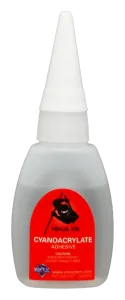
MightyLoc Cyanoacrylate products
FAQ · CYANOACRYLATE
Questions about Cyanoacrylate.
Cyanoacrylate bonds a wide range of substrates, including many plastics, rubbers, and metals, which is why it is used for fast repairs across mixed materials. Some low-energy plastics need a primer first. Confirm substrate suitability and any primer on the product Technical Data Sheet.
It sets in seconds once pressed into a thin film, because the trace moisture on the surfaces triggers the cure. Full strength then builds over a longer period. The exact handling and full-cure times depend on the grade, substrate, and conditions, so confirm them on the Technical Data Sheet.
Generally no. As a class it is rigid and has limited peel and impact strength, so it is not intended for structural loads or large gaps. For load-bearing assemblies a structural adhesive such as a methacrylate is the better fit. Confirm against the Technical Data Sheet.
The warm, humid conditions common across South East Asia supply the surface moisture that triggers cyanoacrylate cure, which generally keeps it fast and can shorten the working time. Confirm the working window for your conditions on the Technical Data Sheet.
How does cyanoacrylate cure?
Cyanoacrylate cures by anionic polymerisation. The trace moisture present on almost any surface starts the reaction, so the adhesive sets in seconds without heat, mixing, or a separate activator on most substrates. In the warm, humid conditions across South East Asia that surface moisture is readily available, which generally keeps cure fast and can shorten the working time. Bond lines are thin, so the parts have to fit closely. Confirm the working window and any recommended primer or accelerator on the product Technical Data Sheet.
Where is cyanoacrylate used?
Cyanoacrylate suits quick assembly and repair of small parts across mixed materials, including many plastics and rubbers that are awkward for other chemistries. It is the fast-fixturing choice on the bench. As a class it is rigid and has limited peel, impact, heat, and humidity resistance, so it is not intended for structural loads, large gaps, or sustained high-temperature service. For those jobs, a structural adhesive is the better starting point.
How do you choose a cyanoacrylate grade?
MightyLoc Ninja 108 is the cyanoacrylate in the range. Match the grade to the substrate and the gap, then read the Technical Data Sheet for the working window and any surface preparation it recommends. If you are weighing instant surface bonding against locking a threaded metal fastener, the related guide below sets the two side by side.