
Bonding chemistry · POLYURETHANE SEALANT
Polyurethane sealants
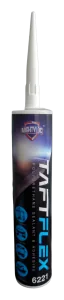
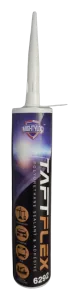
Polyurethane is a moisture-cure elastomeric adhesive and sealant that bonds many substrates and stays flexible, strong, and abrasion resistant. It is paintable and well proven for joints that flex, in transport, automotive, and construction work. Of the two MightyLoc Taftflex grades, Taftflex 6221 bonds and seals vehicle bodies, cab panels and body seams, and Taftflex 6292, a low-modulus sealant, takes expansion and movement joints.
Products
MightyLoc Polyurethane Sealant products
Specifications
| Product | Service temperature | Fixture time | Full cure |
|---|---|---|---|
| Taftflex 6221 | -40 to 80 °C | 70 minutes (skin) | ≥3.5 mm/24 h cure rate |
| Taftflex 6292 | -40 to 90 °C | 90 minutes (skin) | ≥3 mm/24 h cure rate |
Values as published on each product page. Full Technical Data Sheets are linked there.
FAQ · POLYURETHANE SEALANT
Questions about Polyurethane Sealant.
Polyurethane is used for elastic bonding and sealing of joints that flex, where toughness and abrasion resistance matter, in transport, automotive, and construction. It bonds many substrates and stays flexible. Confirm the application and substrate suitability on the product Technical Data Sheet.
Some polyurethanes need a primer on certain surfaces, and some grades are ultraviolet sensitive. Whether a primer is needed depends on the substrate and grade, so confirm the requirement on the product Technical Data Sheet before application.
MightyLoc lists marine work among the applications for its Taftflex polyurethane sealants, and the Taftflex 6292 datasheet rates its water and salt-spray resistance as excellent. No immersion claim is made: for immersed or below-waterline service, confirm suitability with MightyLoc first.
Polyurethane is strong and abrasion resistant but isocyanate based and sometimes ultraviolet sensitive, while MS polymer is low-hazard, paintable, primerless on many substrates, and weather stable. The related guide below sets them side by side for tropical and outdoor joints. Confirm the right choice on the product Technical Data Sheet.
How does polyurethane cure?
The one-part polyurethanes in this range cure by reacting with moisture from the air into a tough, flexible elastomer. Cure is affected by temperature and humidity, so in the warm, humid local climate the working time can be shorter, and it should be confirmed for the conditions. Polyurethane is isocyanate based, so normal handling care applies, with protective-equipment guidance on the safety data sheet. Confirm the working window on the product Technical Data Sheet.
Where is polyurethane sealant used?
Polyurethane suits elastic bonding and sealing of joints that flex, where mechanical toughness and abrasion resistance matter, in transport, automotive, and construction. It is paintable and bonds many substrates, though some grades are ultraviolet sensitive and may need a primer on certain surfaces. The MightyLoc range includes Taftflex 6221 and Taftflex 6292. Confirm substrate suitability and any primer on each product Technical Data Sheet.
Verified figures
Within the range, Taftflex 6221 has a tear strength greater than 10 N per mm, and Taftflex 6292 has a tensile strength greater than 0.25 MPa. Taftflex 6292 is rated excellent for water and salt-spray resistance and average for dilute acids and bases; no immersion claim is made. Read one grade's figures only for that grade, and confirm every value on its Technical Data Sheet.
Taftflex packs, colours and opened-pack life
Both Taftflex grades come in black, white or grey, in the same two packs, applied with a manual or pneumatic gun.
Unopened, they keep 12 months at 15 to 25 °C out of direct sunlight. Once a pack is opened, use it within 24 hours, or the sealant can harden inside it.
| Grade | Packs | Data sheet |
|---|---|---|
| Taftflex 6221 | 310 mL cartridge, 600 mL sausage | Taftflex 6221 TDS |
| Taftflex 6292 | 310 mL cartridge, 600 mL sausage | Taftflex 6292 TDS |